

WIUNIX / COMMUNICATIONS & VOICE
Connect the systems behind every call.
SIP, PBX, SBC and WebRTC engineering, from call routing and integration to audio-path testing and operational diagnostics.
TWO PATHS TO UNDERSTAND
A connected call still needs working audio.
Call signalling sets up and controls a session. Media carries the voice. A call can connect while audio fails in one direction, so testing needs to examine both paths and the network boundaries between them.
The diagram is a logical example. Actual PBX, SBC, carrier and media placement follows your topology, interoperability requirements and agreed security boundary.
ILLUSTRATIVE CALL PATHS
Signalling / call control
Endpoint ↔ PBX / SBC ↔ carrier or integration
Media / voice
Endpoint ↔ configured media route ↔ remote endpoint
Routes may pass through different components. Verify routing, NAT/firewall conditions and the agreed media settings in context; there is no universal topology implied here.
ARCHITECTURE AND INTEROPERABILITY
Fit the call flow to the way your team works.
Map extensions, external numbers, queues, transfers and the systems that need to exchange call information. Design the agreed SIP/PBX/SBC boundary and coordinate carrier or contact-center integration with the responsible providers.
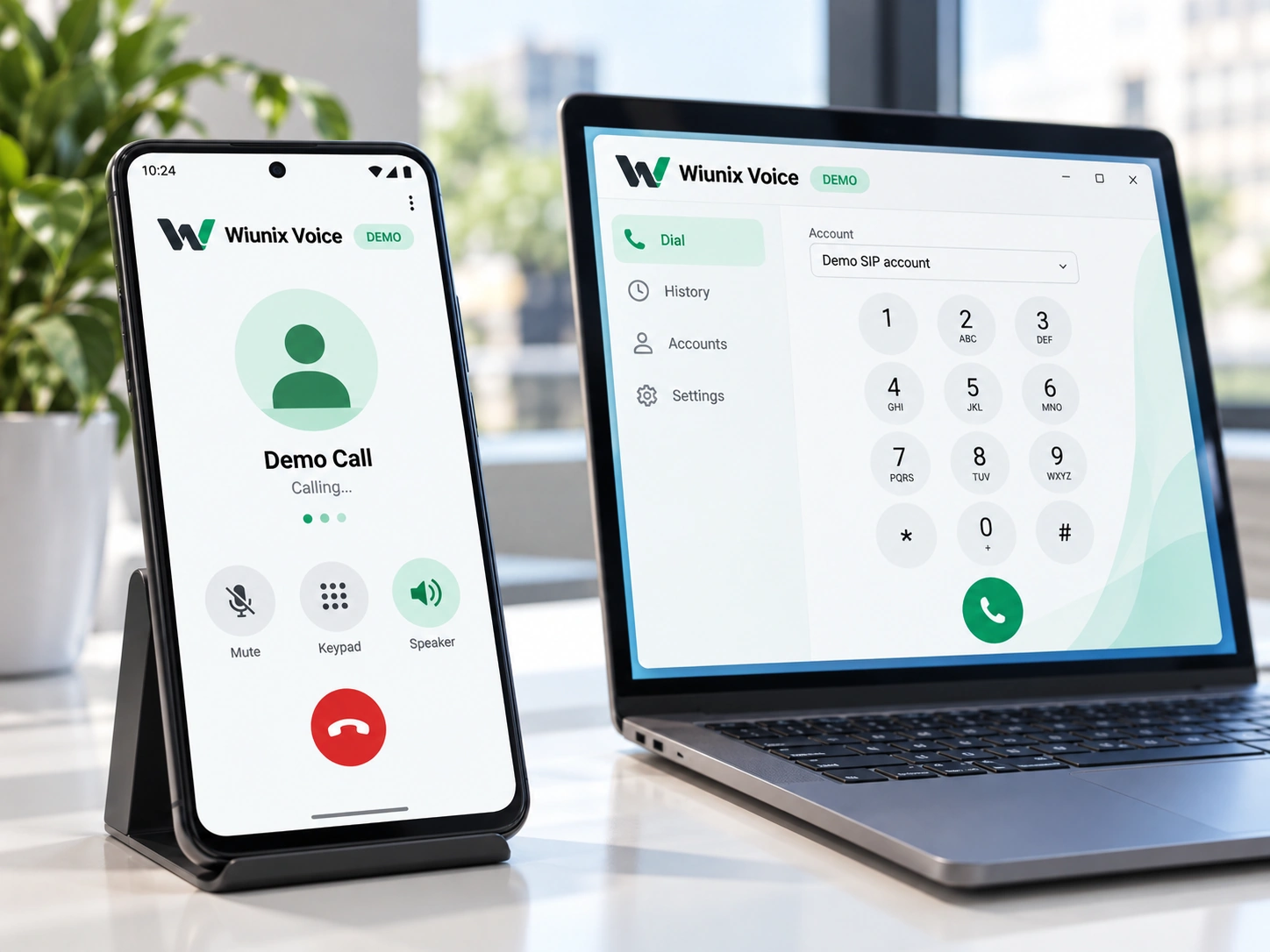
Browser and application calling
WebRTC work includes the application’s call flow, browser permissions and the required signalling/media integration. Browser, network and provider compatibility are checked within the agreed scope.
Carrier accounts, numbering, trunk availability and commercial terms remain provider prerequisites; they are confirmed for the project rather than promised by this page.
TEST THE SCENARIOS THAT MATTER
Check the conversation, not just registration.
A registered endpoint is only a starting point. Agree the call scenarios, participating systems and evidence needed to judge the selected integration.
Routing and feature behaviour
Test agreed inbound and outbound calls, number handling, transfers, queue behaviour and relevant failure cases. Record which endpoint, carrier and application combinations were exercised.
Audio under the selected conditions
Check both audio directions, codec negotiation and relevant network observations such as delay, jitter or packet loss. Interpret results against the agreed conditions; a lab test is not a universal quality or availability guarantee.
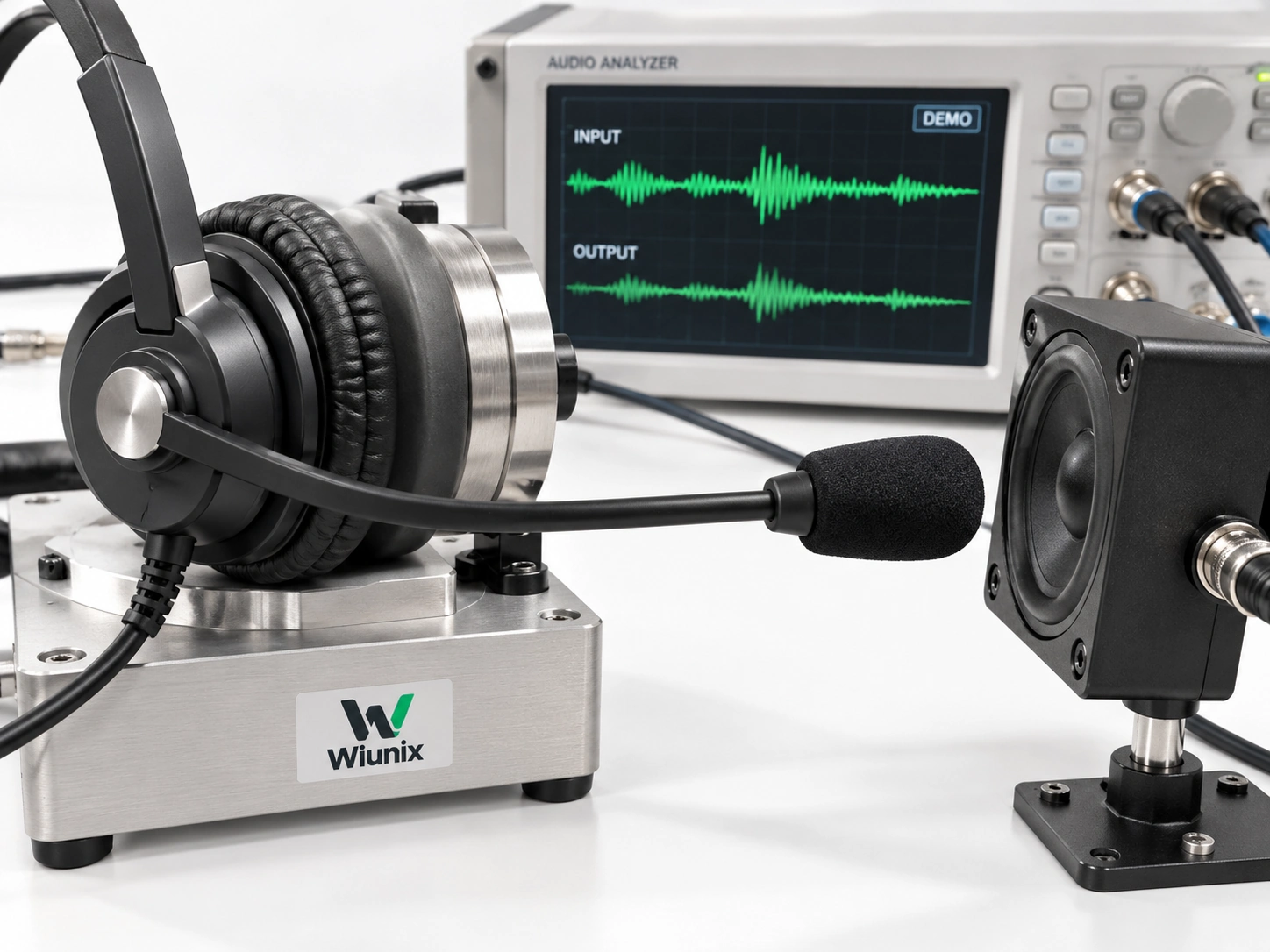
Example: the call connects, one side is silent.
Trace the negotiated media addresses and actual network path. Check relevant NAT, firewall and endpoint settings with the network owner. Change only the agreed configuration, then repeat the same call scenario in both directions.
Illustrative troubleshooting example, not a claim about a customer incident or a blanket instruction to disable a network feature.
DIAGNOSTICS AND OPERATING RESPONSIBILITY
Make faults easier to locate and changes easier to review.
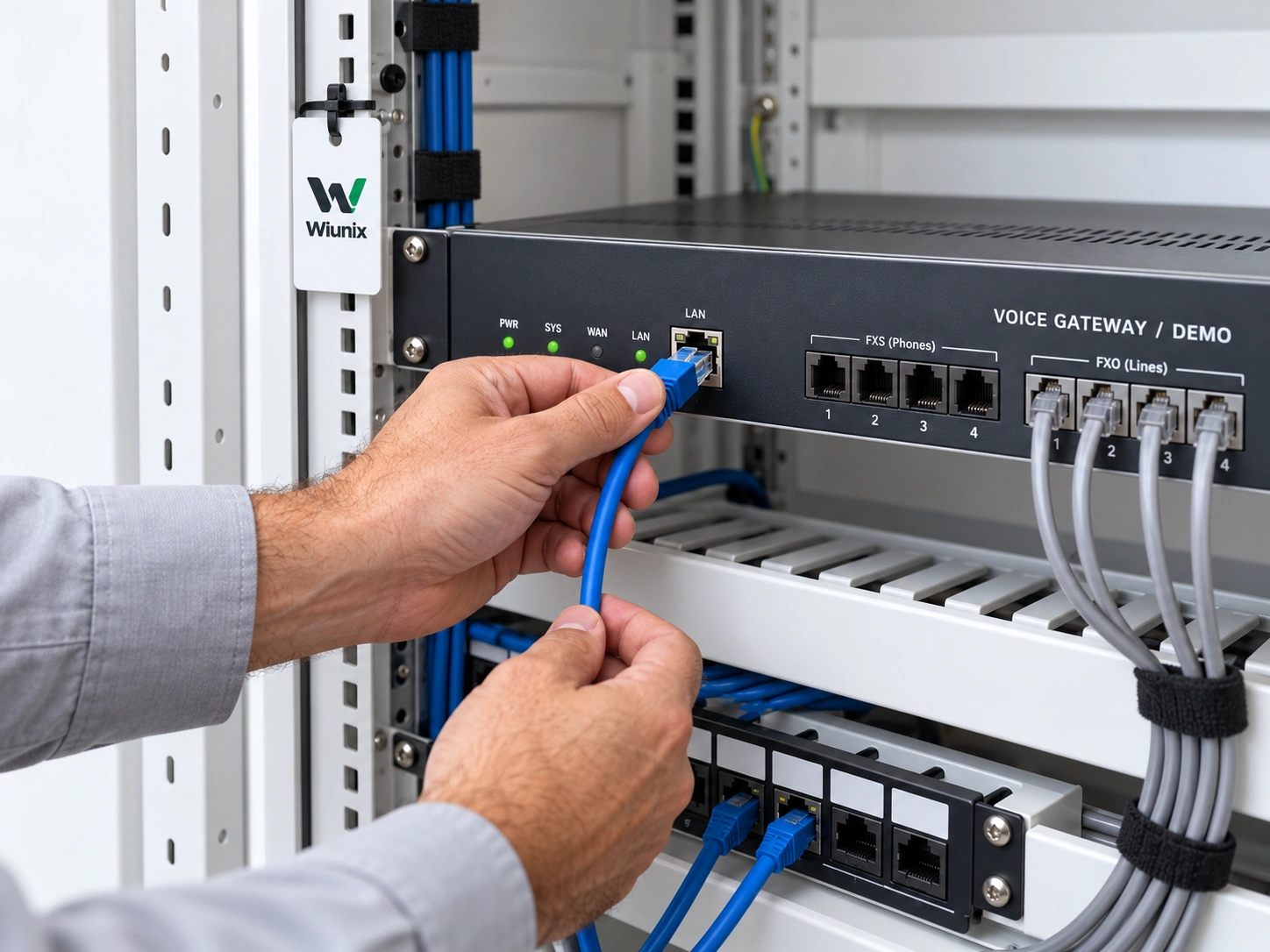
Agree the operational signals, log access and escalation boundaries for the selected systems. Useful diagnostics connect call events to the affected endpoint, route and integration without collecting more sensitive data than the agreed purpose needs.
Review administration access, permitted call routes and exposure of voice services. Plan configuration changes with a recovery path and hand over the agreed routing references, test results and runbooks.
Infrastructure & Cloud →Bring your current call-flow context
Describe the PBX, endpoints, carrier connections, browser or business-system integrations and the problem or change you need. Include network constraints and who operates each part. Keep credentials, private numbers and call records out of the public form.
Contact Wiunix →Looking for the client application?
Wiunix Voice is the client product. This page describes communications engineering services; product capabilities and availability belong on its product page.
Wiunix Voice product →Voice Cloud: hosted control
Voice Cloud is the optional managed RTC companion. Device identities, routes and operating responsibilities can be reviewed within the agreed integration scope; a configured route alone does not prove carrier interoperability.